
Suspended by Merchant Center. Back on Google.
A Dutch Shopify store selling CarPlay screens for motorcycles. Merchant Center flagged it for misrepresentation on every destination and the products vanished from Google. Within three months the account showed zero issues and the catalogue was serving again in four countries.
The notice named a policy. Not a page.
The store sells plug-in CarPlay and Android Auto screens for motorcycles, with a flagship model built for one German brand's handlebar controls. Good product, real customers, a Shopify theme assembled in a page builder.
Merchant Center's verdict, in Dutch, read: “we believe customers are being misled on Google.” No product named. No page named. Just Misrepresentation, critical, on every destination.
Earlier fix attempts had gone the usual way: someone changes the line they think is the problem, the review comes back rejected, and a new claim appears somewhere else on the site.
So we stopped guessing and audited the store the way a Google reviewer reads it.
How we troubleshot it, step by step.
Six phases. The review request is the last one, because a rejected review stays in the account's history and the next reviewer sees it.
Read the store like a reviewer
Every page fully rendered, in all 7 languages the store serves. Every policy page. Checkout tested country by country to see what it really charges. One “10K+” counter only animated when scrolled into view, so a quick text grab missed it. We now wait on every counter.
Open the backend
All 253 theme files pulled through the Shopify Admin API, plus every product, variant, page, menu, market and shipping zone. Most alarming strings sat in disabled sections. Separating live from dormant was half the job.
Check every claim against its source
The Trustpilot count against Trustpilot. Each testimonial against the store's review app API. The warranty against the policy. The returns line against the return policy registered in Merchant Center. Compare-at prices against what was actually charged.
Rank by what Google finds first
26 defects: 6 blockers, 8 high, 7 medium, 5 low. The blockers were the ones a reviewer spots in under a minute, so they became the gate. Nothing gets filed while one is open.
Fix at the source, verify on production
Each fix went into the theme, the section setting or the product data itself, never into appeal wording. After every pass we re-crawled the live site. The final sweep covered all 307 URLs in the sitemap.
Unblock the feed, then request review
Merchant Center held 0 products across 7 empty data sources, and the review button stays disabled until at least one product is in stock there. Once the feed pushed, we pulled draft products that were being sent as in stock, then requested the review.
What the reviewer would have found, and what's live now.
The core of almost every misrepresentation case: claims on the site that Google can check against something else it already holds.
Before
- Trustpilot line2,439 reviews, hardcoded
- Warranty5-year and lifetime, one page
- Returns“Free” vs policy: customer pays
- Discount80% off a price never charged
- Review photosFrom another store's account
- Social proof“10K+” riders counter
- Origin“Made in Amsterdam”
After
- Trustpilot lineLive widget, 147 reviews
- Warranty5 years, every page
- ReturnsMatches the filed policy
- Discount80% reference prices removed
- Review photosOther store's photos removed
- Social proofCounter gone
- Origin“Designed in Netherlands”
The worst single line was the Trustpilot claim. It said 2,439 reviews. The real profile held 107 at the time, about 23 times fewer, on a platform a reviewer checks in one click. It wasn't a widget. It was typed into a page-builder section.
The quietest was the returns line. The return policy filed in Merchant Center, and marked verified by Google, said the customer pays return shipping. The product page said returns were free. Google held both sides of that contradiction.
The store, after the fixes.
Taken from the live product page on October 6, 2026. Store name and logo left out, reviewer name blurred.

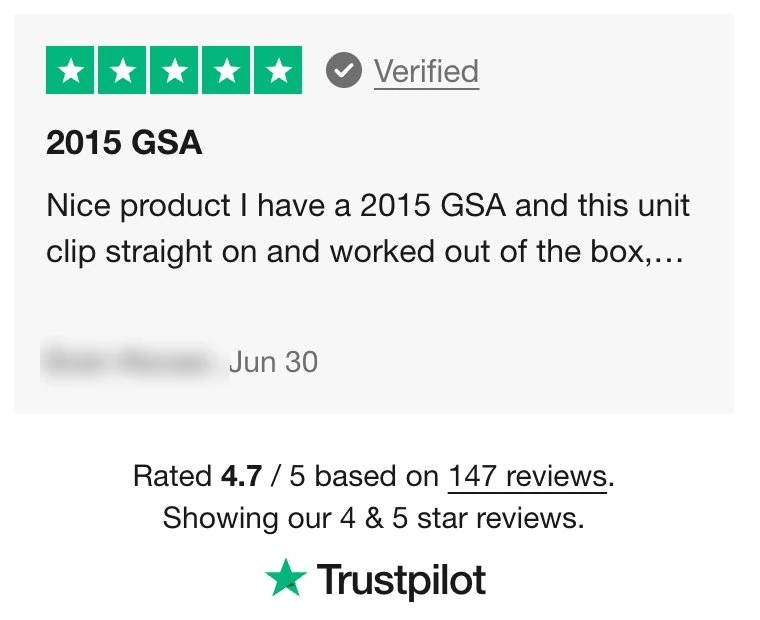
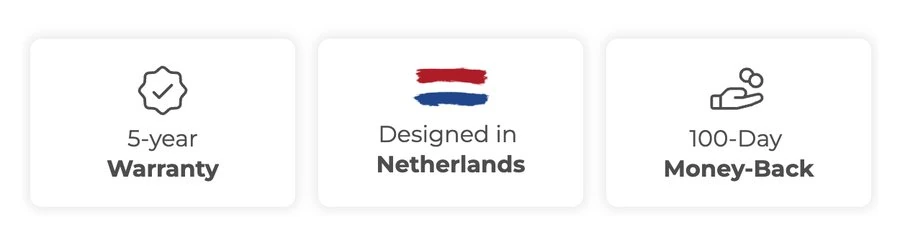
Merchant Center, before and after.
Read directly from the Merchant Center account. The review went in on a Monday. By Tuesday the account issue was gone.
Suspended
- Account issueMisrepresentation, critical
- Affected destinationsAll
- Products in Merchant Center0
- Review buttonDisabled
After review
- Account issues0
- Active products per country8
- Countries servingNL, BE, DE, SE
- Time to fixWithin 3 months
Who made the edits.
On this store we didn't have edit rights at the time. We ran the audit, wrote the fix list with the exact file and section for each item, and the client's own developer made the changes. After every pass we checked production and sent back what was still live.
Once that loop was running, it took under three months to go from suspended to zero issues.
You don't need a developer for this. Most of the 26 defects were theme text, page-builder section settings and one price field. With theme access we make the fixes ourselves, which is faster. See how our Merchant Center misrepresentation fix runs.
The takeaway.
Misrepresentation is rarely one thing. Here it was a review count, a warranty, a returns line, a reference price, borrowed photos and an origin claim, spread over two product pages.
The most dangerous ones are contradictions between surfaces Google already holds: the site against the return policy you filed, the ads against the site, the feed against the product page. A reviewer doesn't need to guess. They compare.
And the Google Ads account is a second, separate review. Merchant Center clearing doesn't restore it on its own. That appeal runs on its own clock, now with a clean store behind it.
Questions, answered.
The questions store owners ask us when the notice lands.
01What causes a Merchant Center misrepresentation suspension on a Shopify store?
Claims Google can check and finds false or contradictory. On this store: a hardcoded Trustpilot review count, two warranty terms on one page, a free-returns line that contradicted the return policy filed in Merchant Center, compare-at prices that were never charged, review photos from another store and unproven origin claims. Missing or conflicting policy pages, fake urgency and contact details that differ across pages are the other usual causes.
02How long does it take to fix Merchant Center misrepresentation?
The review itself was fast here: requested on a Monday, cleared by Tuesday. The work before it is what takes time. Finding every defect, fixing each one at the source and verifying on production took under three months on this store, with the client's developer making the edits. With direct theme access it goes quicker.
03Why can't I click request review in Merchant Center?
One reason we hit on this case: Merchant Center disables the review request until at least one product in the account is in stock. This store had 0 products because the feed app had never pushed, so the button simply wasn't available. Fix the feed first, then check that no draft or out-of-stock products are being sent as available.
04Do I need a developer to fix a misrepresentation suspension?
Usually not. Most defects are theme text, page-builder settings, policy pages and product price fields, all editable in Shopify. On this store the client's developer made the edits because we didn't have edit rights at the time. With access, we make the fixes ourselves.
05Should I request a review as soon as I've fixed the main issue?
Not until every blocker is closed and verified on the live site. A rejected review stays in the account history and the next reviewer sees it. Check the rendered pages in every language, every policy page, the feed and your ads, because the reviewer compares all of them.
Read the thinking first.
The service and the guides behind this fix:
Suspended in Merchant Center? Send us the account.
We tell you what tripped it, whether it's fixable and what it costs. Before you pay anything.